
My Signing Solutions
HomeAboutServicesAgentsBlogContact
What Does a Notary Public Actually Do?
All Articles
Education

What Does a Notary Public Actually Do?

Author
MSS Editorial Team
Editorial Team
Published Date
March 2, 2026
Reading Time
6 min read
Share Article
We dispel common myths and explain the fundamental duties and responsibilities of a commissioned Notary Public in modern commerce.

The role of a Notary Public is one of the oldest in the legal system, dating back to ancient Rome. Yet despite its long history, there are widespread misconceptions about what a notary actually does. Understanding the true scope and limitations of notary services can save you time, money, and potential legal complications.

At its core, a Notary Public is a state-commissioned official who serves as an impartial witness to the signing of important documents. The notary's primary functions include verifying the identity of signers, confirming that signers are acting willingly and are aware of the contents of the documents they are signing, and administering oaths and affirmations when required.

One of the most common misconceptions is that a notary certifies the content or legality of a document. This is false. A notary does not read, review, or validate the legal sufficiency of a document. Their role is strictly limited to verifying identity and witnessing signatures. If you need advice about whether a contract is fair or legally enforceable, you need an attorney — not a notary.

Notaries perform several specific types of notarial acts. An acknowledgment is the most common, where the signer appears before the notary and acknowledges that they signed the document voluntarily. A jurat requires the signer to swear or affirm that the contents of the document are true, and the document is signed in the notary's presence. Copy certification involves the notary certifying that a photocopy is a true and accurate reproduction of an original document.

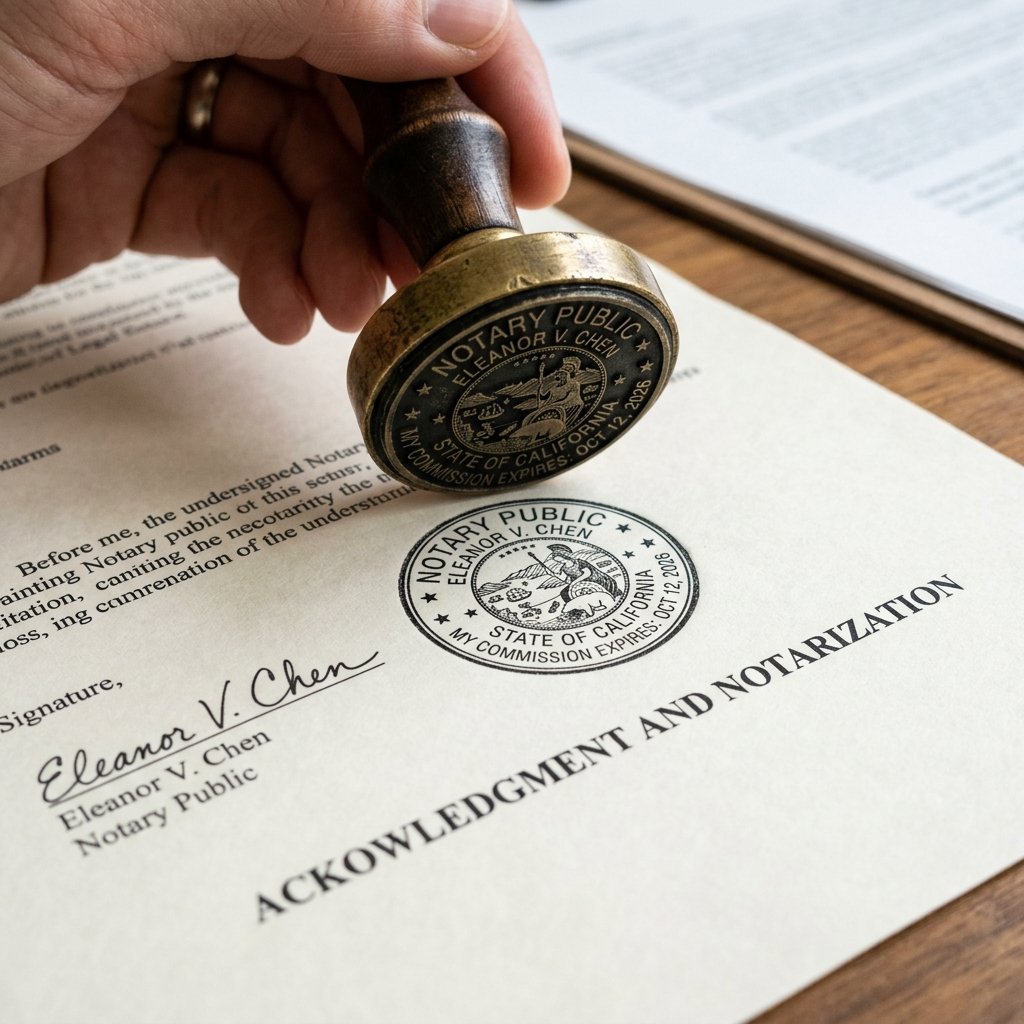
The notary's seal and signature serve as official evidence that a proper notarization took place. Every notary maintains a journal documenting each notarial act performed, including the date, type of act, type of identification presented, and the signer's signature. This journal serves as a permanent record and can be subpoenaed as evidence in legal proceedings.

In recent years, the notary profession has evolved significantly with the adoption of technology. Remote Online Notarization (RON) allows notaries to perform certain acts via secure video conference, using identity verification technology and digital signatures. Electronic notarization (eNotarization) permits the use of electronic seals and signatures on digital documents. These innovations have made notary services more accessible while maintaining the security and integrity that the profession demands.

When selecting a notary, look for professionals who are commissioned by the state, carry Errors & Omissions insurance, and have completed specialized training for the type of documents you need notarized. For loan signings, NNA-certified signing agents represent the gold standard in the industry, having passed rigorous background checks and demonstrated proficiency in mortgage document handling.

Key Takeaways

Notaries verify identity and witness signatures — they do NOT give legal advice
The three main notarial acts are acknowledgments, jurats, and copy certifications
Every notarization is recorded in the notary's official journal
Remote Online Notarization (RON) enables video-based notarization
NNA-certified agents are the gold standard for loan signing
Always verify your notary is commissioned and carries E&O insurance
Previous Article
Notarizing Business Contracts Effectively
Next Article
How to Find a Reliable Notary Near Me

Ready to schedule a signing?

Connect with our nationwide network of certified, background-screened notary professionals.

Book Your Agent
Keep Reading

More From the MSS Blog